- Vaishnodevi Circle, SG Highway, Ahmedabad - 382421
- +91 79 6677 0000
- contact@kdhospital.co.in

- KD Advantage
- Specialities
Cataract
Retina
Cornea & Ocular Surface
Glaucoma
Vision Correction / Refractive Surgery
Paediatric Ophthalmology
Oculoplasty & Orbit
- Doctors
- Techonology
- Patient Corner
- More
- Book Appointment
- KD Advantage
- Specialities
Cataract
Retina
Cornea & Ocular Surface
Glaucoma
Vision Correction / Refractive Surgery
Paediatric Ophthalmology
Oculoplasty & Orbit
- Doctors
- Techonology
- Patient Corner
- More
- Book Appointment
- KD Advantage
- Specialities
Cataract
Retina
Cornea & Ocular Surface
Glaucoma
Vision Correction / Refractive Surgery
Paediatric Ophthalmology
Oculoplasty & Orbit
- Doctors
- Techonology
- Patient Corner
- More
- Book Appointment
- KD Advantage
- Specialities
Cataract
Retina
Cornea & Ocular Surface
Glaucoma
Vision Correction / Refractive Surgery
Paediatric Ophthalmology
Oculoplasty & Orbit
- Doctors
- Techonology
- Patient Corner
- More
- Book Appointment
Ocular Oncology
- Home
- Ocular Oncology
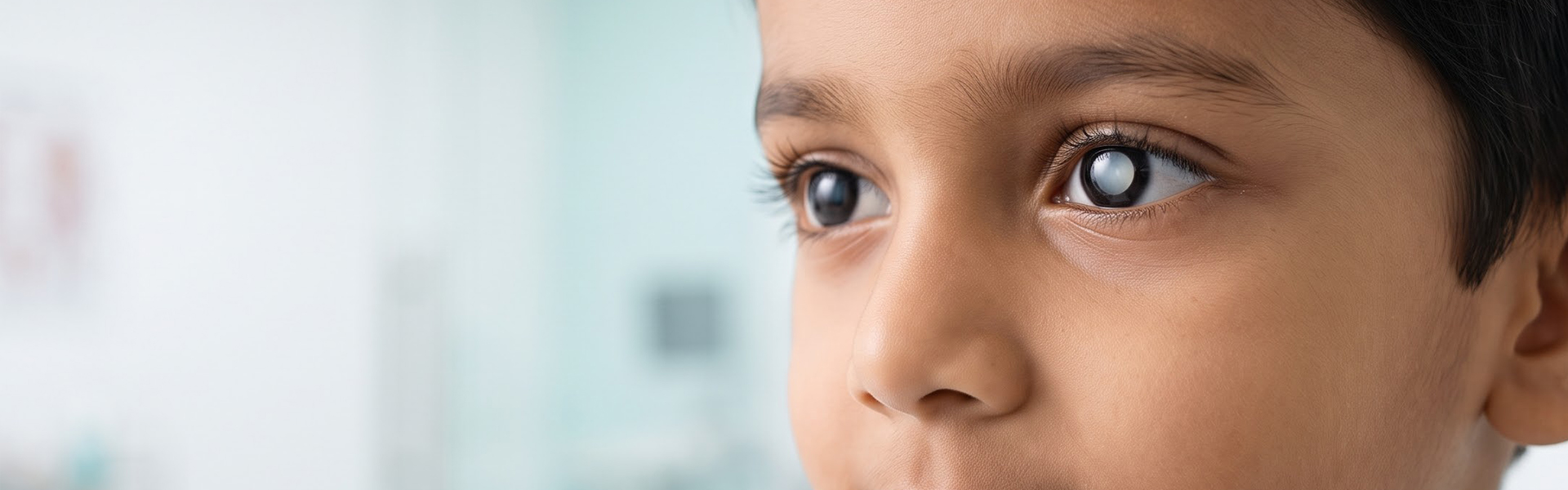
What Is Ocular Oncology?
Ocular oncology deals with tumours that develop in or around the eye, inside the eyeball itself, in the tissues surrounding it, or on the eyelid and its surface. These cancers are rare, and they call for a very particular kind of care: treatment that removes or controls the tumour while doing everything possible to save the eye and the vision in it, because in this field, both the disease and the treatment can threaten sight.
Conditions We Treat
Eye cancers can appear at any age, and the type often depends on whether the patient is a child or an adult:
- Retinoblastoma: A cancer of the retina, almost always found in young children
- Uveal (choroidal) melanoma: The most common eye cancer in adults, arising in the pigmented layer of the eye
- Conjunctival and eyelid tumours, including squamous cell carcinoma and eyelid melanoma
- Orbital tumours: Growths behind or around the eye, affecting the socket and surrounding structures
- Intraocular lymphoma
- Metastatic eye tumours: Cancer that has spread to the eye from elsewhere in the body, most often the breast or lung
Symptoms to Watch For
Eye cancer can be sneaky, many tumours grow silently for a while before causing obvious symptoms. Still, some signs are worth taking seriously:
- A white glow in the pupil, especially noticeable in flash photographs (a key warning sign in young children)
- A new or changing dark spot on the coloured part of the eye or the white of the eye
- Blurred or worsening vision in one eye
- Flashes of light or new floaters
- A visible growth on the eyelid or eye surface that doesn't heal
- The eye appearing to bulge or shift position
- Persistent redness, irritation, or a feeling that something isn't right in one eye
- In children, an eye that appears to turn inward or outward suddenly (strabismus)
Why Early Diagnosis Matters So Much
With eye tumours, time affects two things at once, how treatable the cancer is, and how much vision can be saved. Many ocular cancers stay confined to the eye for a long time before spreading, which means catching them early gives us the best chance of controlling the disease while still preserving the eye and useful sight. Left too long, some tumours can threaten not just vision but life, particularly if they spread beyond the eye.
How We Diagnose It
Because these tumours sit inside a very small, delicate space, diagnosis relies heavily on detailed imaging rather than routine biopsy, which can risk spreading tumour cells:
- A dilated eye examination to directly view the retina and internal structures
- Ocular ultrasound, to measure and characterise the tumour
- OCT (optical coherence tomography) for detailed retinal imaging
- MRI or CT scans, especially for orbital tumours or to check for spread
- Fluorescein or indocyanine green angiography, to study the tumour's blood supply
- Fine needle biopsy, used selectively and carefully when tissue diagnosis is essential
- Genetic testing, particularly for retinoblastoma, since it can run in families
How We Treat It
Treatment is built around a single goal wherever possible: control the cancer while preserving the eye and its vision. The right approach depends heavily on the type, size, and location of the tumour.
- Laser therapy and cryotherapy: For small, localised tumours, especially in retinoblastoma
- Plaque radiotherapy (brachytherapy): Placing a small radioactive disc directly over the tumour, a common eye-preserving treatment for melanoma
- External beam or proton radiation therapy: For larger or more complex tumours
- Intra-arterial and intravitreal chemotherapy: Delivering chemotherapy directly to the eye, increasingly used for retinoblastoma to avoid the side effects of full-body chemotherapy
- Systemic chemotherapy: For tumours that have spread or carry a higher risk of spreading
- Surgery, including tumour removal or, when the cancer is too advanced to save the eye safely, removal of the eye itself (enucleation) to protect life
- Eyelid and orbital reconstruction, when surgery affects the appearance or function of the eye area
After Treatment
Ongoing follow-up is a core part of care with eye cancers, not an afterthought:
- Regular eye examinations to watch for recurrence or new tumours
- Imaging at intervals appropriate to the type of cancer
- Vision rehabilitation and support, including glasses or low-vision aids where needed
- Prosthetic eye fitting and care, for patients who have had an eye removed
- Genetic counselling and screening for family members, particularly with retinoblastoma
- Whole-body screening in some cases, since certain eye cancers can signal or lead to disease elsewhere
Outlook
Outcomes in ocular oncology have improved enormously over the past few decades, especially for retinoblastoma, where survival now exceeds 95% in children who are diagnosed and treated promptly — and a large proportion keep useful vision, sometimes in both eyes. Adult eye cancers like uveal melanoma also respond well to eye-preserving treatment when caught while still confined to the eye. As with most cancers, the biggest single factor in a good outcome is how early it’s found.
A Message for Patients and Parents
A white glow in a child’s eye in a photo, a new dark spot on the eye, sudden blurring in one eye, or a growth on the eyelid that won’t heal are not things to wait out. Eye cancers are rare, but they’re also highly treatable when caught early, and in many cases, both the eye and the vision in it can be saved. If something about your eye, or your child’s eye, doesn’t look right, it’s always worth getting it checked.
-
Find a clinic near you
-
Call for an appointment!
-
Feel free to message us!
KD Eye Centre
- KD Hospital Campus Block B, Vaishnodevi Circle, SG Highway, Ahmedabad-382421