- Vaishnodevi Circle, SG Highway, Ahmedabad - 382421
- +91 79 6677 0000
- contact@kdhospital.co.in

- KD Advantage
- Specialities
Cataract
Retina
Cornea & Ocular Surface
Glaucoma
Vision Correction / Refractive Surgery
Paediatric Ophthalmology
Oculoplasty & Orbit
- Doctors
- Techonology
- Patient Corner
- More
- Book Appointment
- KD Advantage
- Specialities
Cataract
Retina
Cornea & Ocular Surface
Glaucoma
Vision Correction / Refractive Surgery
Paediatric Ophthalmology
Oculoplasty & Orbit
- Doctors
- Techonology
- Patient Corner
- More
- Book Appointment
- KD Advantage
- Specialities
Cataract
Retina
Cornea & Ocular Surface
Glaucoma
Vision Correction / Refractive Surgery
Paediatric Ophthalmology
Oculoplasty & Orbit
- Doctors
- Techonology
- Patient Corner
- More
- Book Appointment
- KD Advantage
- Specialities
Cataract
Retina
Cornea & Ocular Surface
Glaucoma
Vision Correction / Refractive Surgery
Paediatric Ophthalmology
Oculoplasty & Orbit
- Doctors
- Techonology
- Patient Corner
- More
- Book Appointment
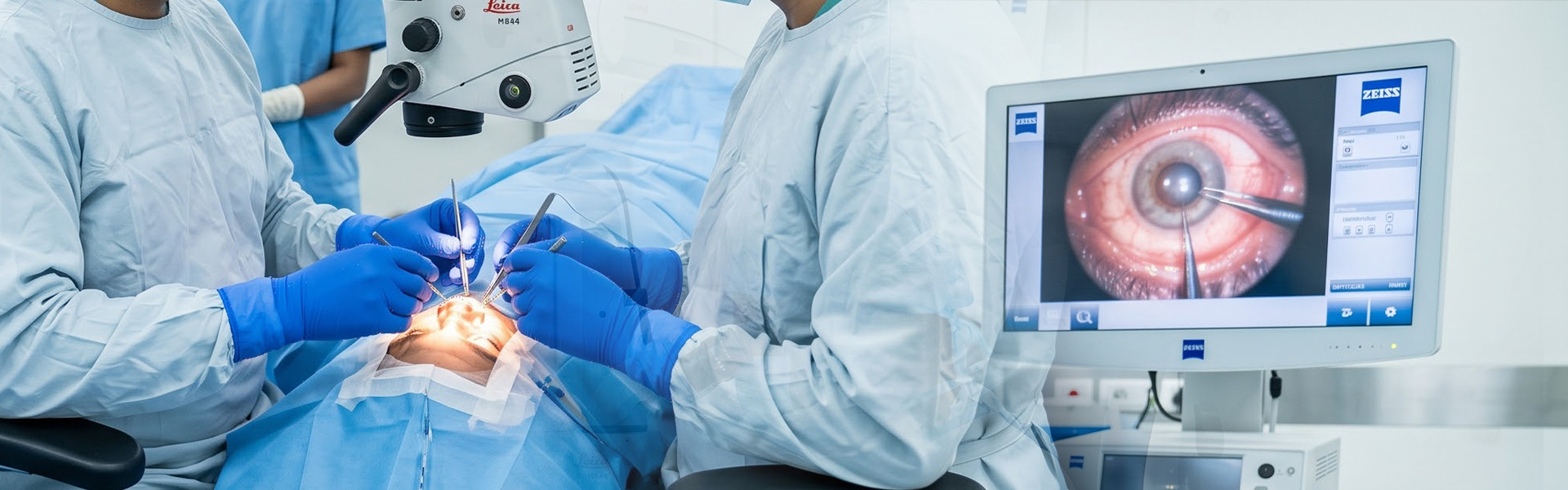
The cornea is the clear, transparent front surface of the eye that helps focus light for clear vision. When the naturally clear and transparent cornea becomes damaged, scarred, swollen, or cloudy, vision may be significantly reduced. In such cases, a corneal transplant may be recommended to restore vision, reduce pain, or improve the appearance of the eye.
What is a corneal transplant?
A corneal transplant (also called keratoplasty) is a surgical procedure in which the damaged or diseased corneal tissue is replaced with healthy donor corneal tissue.
The donor cornea is obtained from a certified eye bank and is carefully screened for safety and quality.
Common conditions requiring a corneal transplant include:
Corneal scarring
- Previous infections
- Eye injuries
- Chemical burns
Keratoconus
- Progressive thinning and bulging of the cornea
Corneal dystrophies
- Inherited conditions affecting corneal clarity
Corneal oedema (swelling of the cornea)
Corneal ulcers or infections, not responding to medical treatment
Types of corneal transplant surgery
1. Penetrating keratoplasty (PK)
- Full-thickness corneal transplant
- The entire damaged cornea is replaced
2. Deep anterior lamellar keratoplasty (DALK)
- Replaces anterior layers of the cornea
- Preserves the patient's healthy inner corneal layer
- Often used for keratoconus or corneal scars limited to the anterior layer
3. Endothelial keratoplasty (DSEK/DMEK)
- Replaces only the innermost corneal layer
- Commonly used for non-resolving corneal oedema
Assessment before your corneal transplant
This includes
- Checking your vision
- Examination of the cornea using a microscope (slit lamp)
- Measurement of eye pressure
- Examination of the retina and optic nerve, when possible
- Assessment of tear film and ocular surface health
Special Tests
Depending on your condition, additional tests may include:
- Corneal topography or corneal mapping
- Corneal scans or imaging
- Eye measurements that may be needed for future glasses, contact lenses, or cataract surgery planning
General health assessment
Why is the pre-surgical assessment important?
The pre-surgical assessment helps your surgeon:
- Confirm that a corneal transplant is the best treatment option.
- Choose the most appropriate type of transplant.
- Identify and reduce potential risks.
- Maximise the chances of a successful outcome and improved vision.
During surgery
- Usually performed under local anaesthesia with sedation.
- Some patients may require general anaesthesia.
- Surgery generally takes 45–90 minutes, depending on the procedure.
After surgery
You may experience:
- Mild discomfort
- Foreign body sensation
- Watering
- Light sensitivity
- Blurred vision initially
Eye protection
- Wear the protective eye shield as instructed.
- Avoid rubbing the eye.
Eye drops
Use prescribed medications exactly as directed.
These may include:
- Antibiotic drops
- Steroid drops
- Lubricating drops
For the first few weeks:
Activity restrictions
For the first few weeks:
Follow-up after surgery
Early postoperative period
Recovery timeline
- Vision continues to stabilise over weeks and months
- Glasses or contact lenses may be prescribed
One year or more
- Full visual recovery may take several months to over a year, especially after full-thickness transplants
Understanding the challenges of corneal transplant surgery
Corneal transplantation is a highly successful procedure that can improve vision, reduce pain, and enhance quality of life. However, like any surgery, it has some challenges and limitations. Understanding these can help you have realistic expectations and participate actively in your care.
Vision improvement may take time
- Vision is often blurry immediately after surgery.
- Recovery can take several months, and sometimes up to a year or longer, depending on the type of transplant performed.
- Vision may continue to change as the eye heals.
Glasses or contact lenses may still be needed
- A corneal transplant does not always restore perfect vision.
- Many patients require glasses or contact lenses after surgery to achieve their best possible vision.
Risk of graft rejection
- The body's immune system may recognise the donor cornea as foreign and attempt to reject it.
- Rejection can occur months or even years after surgery.Many patients require glasses or contact lenses after surgery to achieve their best possible vision.
- Early treatment is often successful if symptoms are reported promptly.
Seek urgent medical attention if you develop
- Redness of the eye
- Increased sensitivity to light
- Reduced vision
- Eye pain
Lifelong follow-up Is Important
- Regular eye examinations are necessary after surgery.
- Some patients may need eye drops for months or even years.
- Ongoing monitoring helps detect problems early.
Risk of complications
Although uncommon, complications can occur, including:
- Infection
- Increased eye pressure (glaucoma)
- Cataract formation
- Graft failure or swelling of the transplanted cornea
- Graft rejection
Signs of corneal graft rejection
Seek urgent medical attention if you notice:
- R-S-V-P warning signs
- R – Redness of the eye
- S – Sensitivity to light
- V – Vision decrease
- P – Pain
Additional treatment or surgery may occasionally be required.
The donor cornea may not last forever
- Many transplanted corneas remain healthy for many years.
- In some cases, the graft may gradually lose function, and another transplant may be needed in the future.
Existing eye problems may limit vision
A successful transplant improves the clarity of the cornea, but vision may still be affected by other eye conditions, such as:
- Glaucoma
- Retinal disease
- Optic nerve damage
- Age-related eye disorders
Commitment to post-operative care
The success of your transplant depends not only on the surgery but also on:
- Underlying eye condition
- Type of transplant
- Using prescribed eye drops correctly
- Following post-operative care and instructions properly
- Attending follow-up appointments
- Reporting symptoms promptly
Despite these challenges, corneal transplantation remains one of the most successful forms of tissue transplantation. Most patients experience significant benefits, and careful follow-up greatly improves the chances of long-term success.
-
Find a clinic near you
-
Call for an appointment!
-
Feel free to message us!
KD Eye Centre
- KD Hospital Campus Block B, Vaishnodevi Circle, SG Highway, Ahmedabad-382421